Saturday, December 22, 2018

The Final Farewell

This has been a welcomed ending of this journey. I started at Walden in 2011 and after 7 years I am finally at the end.  During this journey I stopped three times due to surgery and other health challenges, withdrew because I was going through a divorce and then was dismissed from the university due to low GPA at the beginning of this Capstone in 2015. I appealed three times, rejected the first two and finally in September I was readmitted.  I say this to say one lesson learned is to never give up on a desire or dream; no matter how many roadblocks you may face, keep pushing. Another lesson from this program is the importance is building your community of practice.  Within the profession of ECE, there are various roads to meets every passion and interest.  Having a variety of members in your practice enables you to stay informed, maintain resources, and gain knowledge.  A third lesson is the importance of gaining and retaining research-based knowledge to defend your actions and choices in how you work with adults, choices we make for families and children, and ideas and programs we develop and support. This last lesson is the reason for my long-term goal: to maintain yearly memberships with at least one national and one international early childhood organizations in efforts to sustain and gain knowledge in trends and best practice.  

To my professor and colleagues, thank you for challenging my thoughts and ideas.  I appreciate you feedback, questions, and support.  Everything you gave to me helped in my professional growth.  I found your ideas interesting and your projects captivating as we all served different needs under the same umbrella of early education.  I wish you tremendous success in your journey.  I hope you strive for excellence in your work as you did with each course.  I hope your find yourself in areas if discomfort and challenge because the gold is working your way through them.  May every wish and desire come true for you.

I hope to have you as members of my community of practice moving forward. **I am technology illiterate, so I have no idea how to record or upload a video on here**

Best of luck to you. Looking forward to 15-20 years out to see how our visions have manifested into reality. 

Talibah Thomas
FB: Talibah Roxy Summers Thomas
Email: Talibah.thomas@gmail.com
            

Saturday, December 8, 2018

International Organizations and Communities of Practice


Since becoming an expat, I have found great importance in expanding my community of practice to include international organizations to keep up to date in my profession as well as possible employment and professional development opportunities. Below are three organizations I have found in my research:

OMEP (Organization for Early Childhood Education and Care)
OMEP was founded in 1948 the welfare of young children was impacted due to World War!  This non-profit organization has committees in over 70 countries and “consultative status” with UNICEF and the United Nations.  Their mission is to promote and defend the right of high-quality education and rights and care to every child worldwide. OMEP organizes and facilitates international conferences, training for early education and care, family education, research and study in issues related to early care and education and collects and disperses information worldwide. Currently, there are no job opportunities posted (there is no option for them on the site). However, there are links to professional development and volunteer opportunities (www.worldomep.org).

Save the Children
Save the Children is an organization that supports children globally to ensure they are healthy, safe, and learning.  Supporting children in crisis and those who are in need, Save the Children has Emergency Response efforts, as well as global programs to create educational programs and health support in vulnerable places and those countries in crisis.  Aside from loads of volunteer opportunities, they have 108 job openings across the US and positions in three other countries.  One job that caught my eye an Early Childhood Development program specialist. Responsibilities included, management of program implementation, compliance programs, start up support, and partner and budget planning. Surprisingly, requirements included, a HS diploma and 3-5 years with infant toddler experience (www.savethechildren.org).

Salama Bint Hamdan Al Nahyan Foundation
The United Arab Emirates just celebrated its 47thnational day.  41 years ago, early in the beginning of the countries establishment, this foundation was formed to support the development of Emiratis, beginning from zero to three.  Currently the foundation has three initiatives it is focusing on: parent programs to increase support and empower parents on best practice, a fellowship program in partner with Yale university, and a development center also partnered with Yale University that will house a lab for research, workshops, resources, and lectures.  Currently there are no job offerings posted (www.shf.ae).


Sunday, November 25, 2018

National and Federal ECE Organizations

Below are three federal/national organizations that are in the extended community of practice for educators, families, and children:

The American Federation of Teachers (AFT) is a union comprised of over 1.7 million members.  Its mission is to advocate for democracy, economic opportunity, and high-quality education for families and children. Having various departments including, international affairs, public service, early childhood, and healthcare this union has pushed for a range of initiatives for reform including tenure for teachers, child labor laws, and accountability for standardized testing.  Connecting with a range of community partners the AFT is committed to community engagement and advancement. 

Currently there are two positions open at AFT: Social Justice/ Community Engagement Organizer and National Representative. Both require experience in organizing social, racial and economic justice, experience in executing campaigns and working with coalitions.


The Association for Childhood Education Internationalbegan in 1892, initially focusing on kindergarten education, internationally and in the US.  Over the years, the focus widens to education through the primary years and now education up to 18 years, showing special care and attention to fragile and children with high needs. This non-profit organization is committed to promoting equal, quality, and accessible education in order to prepare children to become responsible citizens worldwide.  Based on the principles that collaboration is imperative for social impact, children’s development must start early, innovation is key to educational transformation, and action should be global, ACEI work includes education diplomacy and innovation exchange. 

I found no job postings on the site.


The National Black Child Development Institute(NBCDI) was established in 1970 to support, advocate, and advance reforms around issues that impact black children and their families.  Their mission is to “improve and advance the quality of life for Black children and their families through education and advocacy” (https://www.nbcdi.org/who-we-are). With affiliates nationwide, over 20 communities are supported by members who implement national programs for families and children. This organization is a resource agency providing training, programs, and advocacy work specifically to support black children, from birth to age eight, and their families around early childhood care, literacy, health and wellness. 

Currently there is a job posting for a fellowship manager who will be responsible for coordinating fellowship activities and managing the fellowship program.  There are no specific requirements listed, however, based on the description, one should have experience in program evaluation, project planning and strategy, community and partner engagement, and recruitment including marketing and selection. 

Saturday, November 10, 2018

ECE community: Local and State Levels

Here are three organizations in the DC Metro area that I would explore as possible resources and employment options (If I was still in the area and not living overseas).

Zero to Three is a non-profit organization that provides education and knowledge to “nature early development” to families, policy makers, and professionals (Zero to Three, 2018).  This organization is comprised of professionals in mental health, physical health, and child development who support the adults (parents/ caregivers) that support children from birth to age three. Some of their current initiatives and projects include: Transcultural Innovation Initiative, Professional Development and Workforce Innovations, and the Military Family Project.  Currently there are not any job openings for this organization. I believe organizations like these are vital to creating communities of healthy families and young children; the more one knows, the better one will be. 


Under the Department of Health and Human Services is the National Center on Early Childhood Development, Teaching and Learning.  This center supports the development and promotion of best practice and professional development.  Their work is comprised but not limited to, professional development for early learning teachers, curriculum development, assessment and data.  The subsidiary of this government agency is one of the first resources for Head Start programs which support thousands of low-income children and their families. The work within this agency is nation wide and due to government funding has a great impact in teacher preparation, quality of learning environments, and the development of early learners.  There are numerous vacancies available nationwide (US) including Advocate, Assistant director, teacher, child development specialist.


Urban Teachers is an organization that trains teachers in an urban classroom settings, across a three year period.  As a participant of the program,  you earn a Masters in Education from Johns Hopkins University.   Currently, urban teachers have a position open for instructional coaches which support teachers in developing skills to become effective teachers.  This program believes that high effective teachers give students necessary skills to exceed both in the classroom and in their communities. 


Friday, November 2, 2018

Hello All,

It has been a really long time since I was last on this blog.  I am excited to learn from you all as we reach the final marks in our masters program journey.  I look forward to your feedback, reflections and comments.

Best,

Talibah

Sunday, November 9, 2014

Exploring State and Local Opportunities

In Washington, DC there are many national organizations whose headquarters are stationed in the city.  There are many national organizations and many non profit organizations in the city however, I found it difficult to find some that were specific to early childhood education.  In my search I came across three, one of which I have had interest in since I have worked with them in my previous employment. School Readiness Consulting, is a company that services the early learning community in a variety of ways.  They offer training and support in CLASS, they provide internal leadership and professional development, create and implement data collection for decision making and support policy implementation on a variety of levels (School Readiness Consulting, 2014). This firm helped to support instructional specialist in my previous position specifically on adult coaching development.  Another organization I found was Fight for Children which raises money to ensure low income children obtain high quality education and remain healthy (Fight for Children, 2014).  The final organization is the DC Promise Neighborhood Initiative. The focus of the nonprofit is to guide children through an educational path to graduate and become successful members of their communities.  Currently this organization has a position that was very interesting, a early learning coordinator for which I am qualified based on the requirements listed below.  However, I have limited experience in supervisory positions and I have never worked for a non-profit.  The description is below:

SummaryWorks closely with DCPNI partner organizations, parents, and other stakeholders to ensure high quality care and education for all children and parents participating in DCPNI and partner educational and development services.
Coordination and Management
  • Responsible for the overall operation and well-being of the early learning programs
  • Supervises educational activities facilitated by external parties
  • Plans and implements intentional, systematic, and engaging activities that support early development and are inclusive of all children
  • In collaboration with partner organizations, plans and ensures the implementation of intentional, systematic, and engaging activities that support the development of early learning skills
  • Helps to create safe, clean, and engaging programs that encourage both exploration and complex play for children
  • Establishes positive working relationships and communicates effectively with children, parents, partners, community members, and DCPNI staff
  • Assist in the coordination of training, technical assistance, and professional development relevant to wraparound support for early learning providers and community stakeholders
Program Quality, Monitoring, and Evaluation
  • Ensures the safety, security, and well-being of all children and staff
  • Ensures that all goals for quality control, curriculum implementation, staff management and training, parent communication, record keeping, facility operations, and community outreach are met
  • Oversees and maintains children’s records as well as all documentation
  • Engages family participation in programs through opportunities to visit, volunteer, and/or share resources
  • Proactively identifies opportunities and contributes as part of the Early Learning team
Supervisory Responsibilities
This job has no supervisory responsibility.
Educational and Professional Qualifications:
  • Bachelor’s degree in Early Childhood Education or related field
  • 2 to 3 years of professional early childhood education teaching experience required
  • Certification in Infant and Child CPR and First Aid strongly preferred
  • Demonstrated knowledge of child development, pre-literacy and literacy attainment and early childhood best practices required
  • Teaching or educational leadership experience in a low-income community strongly preferred
  • Understanding of DC early learning community, early learning standards and kindergarten readiness strongly preferred
  • Demonstrated ability in working with cross-functional teams
  • Demonstrated ability to work effectively with early learning providers with regard to program implementation
  • The ability to work flexibly in a rapidly changing environment
  • Excellent written and oral communications skills
  • Experience working in Ward 7 or in schools or organization East of the River is highly preferred

Resources:

DC Promise Neighborhood Initiative (2014). Retrieved from http://dcpni.org/early-learning-coordinator/

Fight for Children (2014). Retrieved from http://www.fightforchildren.org/About_Us.html

School Readiness Consulting (2014). Retrieved from http://www.schoolreadinessconsulting.com/

Saturday, August 24, 2013

Thank you

As this class comes to end, I would like to thank each of your for sharing your thoughts, ideas, and personal memories and situations.  I have learned so much from each of you as you all have helped to increase my understanding of effective communication.  I wish you well in your professional and educational journey and look forward to working with each of you in our final classes.
Best,

Talibah

Tuesday, August 6, 2013

Adjourning in Groups

I have worked with several groups but, I have only reached the adjourning with a handful.  Most recently I was assigned to work with a team of teachers for the last two years. In the beginning we had a difficult time moving through the norming stage but we finally did after almost a years work.  That team was removed from my case load this year and it was/is very difficult for me and other members of the team. Questions about trust with the new coach, effectiveness, and worries about having to start the forming and norming process all over have been revealed.  We had clear norms, built a mutual respect for one another, knew each others strengths, and really understood the goal for our work together.  We met one final time at the end of the school year where I said good-bye's and highlighted some of the goals we had accomplished over the two years.  Many members of the team approached me individually to express thanks and sadness.  This team was important to me on a personal level which is why is has been difficult to adjourn from them.  Adjournment offered closure with the group.  It offered the opportunity to reflect in order to help us grow in future situations. Although I appreciate the advice and food for thought from my Walden colleagues, I will not have a difficult time adjourning from them.  Working with others in this setting is a task to reach the end goal.  With such distance between us that cohesiveness is not authentic, rather forced.

Thursday, August 1, 2013

Disagreements and Conflicts

I have been with my current boyfriend for almost 5 years.  Needless to say we have surely had many instances with disagreements, as I am sure most couple have.  In the beginning it was rough learning one another but, now after some years and us moving in together the disagreements do not happen as often and do not escalate like they use to.  Most recently, we got into a disagreement (I prefer not to get into details) and we both ended up talking loudly and aggressively toward one another.  In the past I have had problems keeping the focus on the issue, frequently bringing in other issues that honestly may or may not be related.  I have learned that is NOT a good idea so when in the midst of conflict I focus really hard on listening and not quickly responding (O'Hair & Wiemann, 2012, p. 239). Over the past few months I have learned a few strategies that have really helped maintain calmness and respect for one another during these times:

1. I try to state my feelings and needs as clearly as possible and then I ask for him to repeat what I said so that I can confirm we both have the same clear understanding (The Center for Nonviolent Communication. (n.d.). The center for nonviolent communication. Retrieved from http://www.cnvc.org/)

2. I ask questions that must be answered specifically.  I avoide yes/ no questions to gain a better understanding of his position (O'Hair & Wiemann, 2012, p.240). 

3. I try to compromise as often as possible. Specifically when I need something done I ask "when will you do it by?" so that I dont get upset when its not done when I think it should have been done and he also maintains power in that he has control over when he wants to do it (O'Hair & Wiemann, 2012, p. 241, 244).

All three of these strategies have really helped the communication between the both of us and aided in the creation of a safe, respectful environment were we both feel comfortable address difficult issues.  What types of strategies have you all found that have worked to increase your communication with your spouse, partner, or person you interact with frequently?

References

O'Hair, D., & Wiemann, M. (2012). Real communication. New York: Bedford/St. Martin's.

The Center for Nonviolent Communication. (n.d.). The center for nonviolent communication. Retrieved from http://www.cnvc.org/


Saturday, July 27, 2013

Communication Evaluation

The communication evaluation this week was very interesting.  I had my significant other and my mother complete the survey. The one thing that surprised me was that my mother did not rate me as high as I thought she would have for verbal aggressiveness especially since we have a long history of ineffective communication with one another.   After all of the exercises this week, I was reminded of the importance of knowing yourself, as it impact your communication with others.  Having self-esteem, knowing how we feel about specific things, and being able to continuously assess and reflect on our abilities is crucial. Without having those skills we will never grow in our communication or be able to effectively use communication as a way of building relationships both professionally and personally.  Another insight I had this week was how I manage my identity to others, specifically self presentation.  Depending on the setting, there are certain aspects I choose to reveal which have been successful thus far, however when determining what to present to others, I must take into account how that will be received by others and how that can impact my communication with those individuals.  This is especially important when determining how to present yourself to children and families and finding the fine line between building a personal professional relationship that does not cross to far into personal but far enough that the parents trust and value your opinion and input.  This week was eye opening in that like our professional practices, communication is constant and we should always be engaging in reflection around our communication so that it continues to be effective.

Friday, July 5, 2013

Communication

When thinking about communication one of the first people that comes to mind is the fabulous OPRAH!


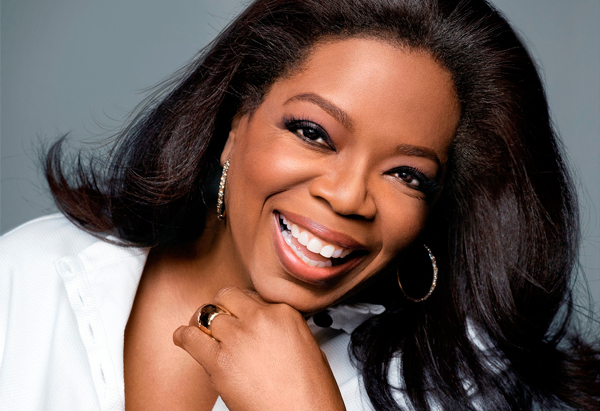
Oprah, unlike many other new anchors and TV personalities, is able to show the affiliation she has for others in a way unlike anyone else.  When interviewing I notice she laughs and smiles, when appropriate, she is gracious for allowing others to speak with her, she touches her guest, on the hand or shoulder, and whether the topic of a serious nature or not the viewer, or at least I walk away feeling touched, inspired, or open to receiving the information present or extracted from the interview (O'Hair & Wiemann, 2012, p. 6).  Oprah also has a goal in mind when speaking or interviewing.  She does not talk to gossip or slander but rather to expose a truth, dispel a myth, gain understanding, etc.  She uses her ability to communicate to achieve a specific goal, which is why she is considered one of the most influential people (O'Hair & Wiemann, 2012, p. 7).  

Oprah is influential over many people, "there is no body else with that kind of consistency and power", as stated by Dorothy Pomerantz of Forbes.com (Reaney, 2013). Additionally, Oprah always seems to be aware of cultural barriers and differences when speaking to others, she demonstrates appropriate behavior which make you want to spill all the tea! She is surely one that I have attempted to model some of my own communications after.  She is very successful and a huge portion of that is due to her ability to communicate.  I admire her ability to disagree without making others feel degraded or intimidated.  I admire her sincereness when speaking with others and respect for differences.   I admire her ability to accept responsibility for her communication, as she often expects the same when interviewing others (O'Hair & Wiemann, 2013, p.15).  My current level of communication is aligned with my experiences, age, and knowledge I have gained through work and personal experiences.  As my experiences and knowledge deepen and expand over time and through opportunities my level of communication will change and expect.  

References

O'Hair, D., & Wiemann, M. (2012). Real communication. New York: Bedford/St. Martin's.

Reaney, P. (2013). Oprah tops forbes' most powerful celebrity list. Huff Post Media. Retrieved from http://www.huffingtonpost.com/2013/06/26/oprah-forbes-most-powerful-celebrity_n_3500418.html 


Saturday, April 27, 2013

Professional Hopes and Goals

This class has truly opened my eyes to the real meaning of diversity and its effects within the field of early childhood education.  One hope that I have for families of diverse backgrounds is that they are open to sharing their experiences and cultures to others and that they understand that many of us early educators are living works of continuous education.  As teachers, we may not get it right the first time but I hope parents and families see our passion and attempts to incorporate and learn and they give us a chance to make them feel welcomed and respected.

In regard to the early childhood field, I hope anti-bias and diversity education become standard courses in undergraduate studies, a requirement to obtain or renew and teaching license, and are seen as valuable professional development opportunities for all professionals within the field.  It saddens me that the growth I made and the information I learned during this class is being present to me for the first time.  I have been in the field for 7 years this August and how useful this would have been to have my first year in the classroom.

To my colleagues, I appreciate your insightful ideas, thoughts, and information you posted during this course.  I have gained new information from each of you.  I wish you well in all of your future endeavors and may your light continue to shine, your vision remain to close to heart, and you always remember your purpose and reason for wanting to work with young children and their families.

Best to all of you!

Saturday, April 20, 2013

Welcoming Families Around the World

There are many steps I would take to welcome a child a their family from Qatar.  I would first seek general information about the country from the internet and the embassy.  This would help to provide me with a general overview on the countries customs, social rules of behavior, clothing, holidays, religion,etc.  My next step would be to have a lengthy conversation with the family to learn about the family culture, their ideas of education, gender roles, behavior, family celebrations, and other information that is specific to the family.  This would aide in ensuring I have culturally proper interactions with the child, their family, and provide some consistency between home and school.  I would ask the family to teach me common words and phrases, 1 or 2 children's games and songs.  Having this information would allow me to increase my interaction with the child as well as the interaction between the child and other children.  We would be able to greet the child in their native language, play games they are familiar with, and sing songs.  This alone will aide in the child feeling accepted and valued and increase a positive classroom environment.  It would be important for the child to see a representation of their culture within the classroom, so family pictures, pictures of famous and well know places in Qatar, food, flowers and clothing for dramatic play should be added. Lastly, I would have the family come in as often as possible to read stories, sing songs, share meals and treats native to their country, and tell family and culture stories.  Including the family will show my respect and value for the uniqueness and diversity they bring to my classroom.  It will enhance the relationship and will create a positive  foundation for the family as I would be their first experience with a non-native teacher and school.

Saturday, April 13, 2013

The personal side

I remember being a sophomore in college and I decided to get a part time job at the local grocery store.  My college was in a country town where the only black people there were those attending the university.  I was a cashier and one day this white woman came through my line with a fur hat.  She was a much older lady and by her demeanor towards me, she was not happy that she had to go through the line with a black cashier (there were only two open at the time).  To pay for her items she wrote a check.  I put the check through and it was declined.  I ran it again and it was not accepted.  I leaned in quietly and said "ma'am your check is not being accepted do you have another way to pay for your items".  Well she instantly became LOUD and angry saying "clearly you don't know what your doing", "you people cant even work a machine", "this is why only certain people should be allowed to handle peoples money".  Well I stayed calm on the outside but on the inside I had one too may "you people" for my liking.  I was angry that she stereotyped me.  I was angry she called me uneducated all because I was black. The floor manager came over and tried to run her check with me there and it was also declined.  The store manager said the same thing to her I said and she went into her pocket and pulled out cash, threw it at me and walked out.  No one said anything to me, not another employee, manager, nothing.  That was my last day working at that store.  I was hurt that someone accused me of not being able to do my job because I was black.  She accused me of purposely trying to embarrass her because I was black. The sad part is that in those parts, the only black people many people see is what is on TV and that's what they base their assumptions and thoughts off.  It would have to be a personal investment of those living in limited diverse areas to learn and want to learn about other culture, otherwise the same assumptions will continue to happen.

Saturday, March 30, 2013

Practicing Awareness of Microagressions

I went to college in Western Maryland near the West Virginia line. There were limited African American there.  The surrounding cities' populations are mostly filled with low income Whites who have had limited or no interaction with ethnicity's  others than their own.  The biggest store near the college is Walmart which is a town away.  One afternoon I was walking through Walmart with my sorority sisters, I was light skin with very short hair (boy cut), she was dark skin with locs, and the other was brown with wavy hair.  As we were walking and shopping, a little white girl ran up to my darker skinned friend stopped in front of her and yelled at the top of her lungs "AHHHHHH NIGGGGEERRRR"! We were all baffled, speechless, angered so much so, we froze.  No one moved because we were shocked that this happen 1 and shocked that the mother was right there and laughed.  Not that we thought racism was dead, because we all know it is alive but, that the level of blatant disrespect that children learn from their parents is generational and long lasting.  Moreover, it takes everyone involved to want to grow into an accepting culture and if people choose not to expand their horizons or choose to believe the inaccurate representations of African American on TV (reality shows, music videos) are true, then things will not change.

I was hurt for my friend who shook it off, as one she not an African American citizen, she British but, I was more hurt for that child as she is being taught hate at such an early age.  I would categorise this example of microagression as microasault as it was deliberate intentional and purposefully done in attempts to hurt (Laureate Education, 2011).  This was one of the most overtly noticeable examples of microagression I have observed or be apart of.  I hope that with education things will slowly begin to change.


Laureate Education (2011). Microaggressions in everyday life

Saturday, March 23, 2013

Perspectives on Diversity and Culture


I have a friend who is African from Cameroon who is culturally different from me in many ways however, in other ways we are culturally similar.  When asked her definition of culture she responded “Culture is what makes each of us different.  It is the things which are not always known to the general public but are special and sacred to individuals and their families.  Diversity is a mixture of various cultures.  Diversity is also the understanding that is it comprised of a variety of differences”.   My friend of Indian decent had a similar definition of culture, “ it is the unique pieces of me that others in my family may share.  Culture is the special characteristics that create individuality and uniqueness among a group of people.  Culture is shared understandings and beliefs.  Diversity is a mixture of cultures”.  I also spoke with a colleague of mine who responded “diversity is a mixture of ethnicity's, races, and cultures.  Culture is what defines who we are as people.  Some of our culture is passed and learned through family and history, other parts of our culture is influenced by media  and other groups”.
            I was encouraged that all three of the responses were similar to the definitions we have learned and expanded through this class.  Culture is unconscious and incorporated perspectives from a variety of places (Laureate Education, 2011).  One of the responses highlighted it perfect when she said “it is not always known to the general public” which is very similar to the understanding Janet Gonzalez-Mena shared as comparing culture to an iceberg, what is not seen is the deep culture (Laureate Education, 2011).   None of these answers omitted aspects of culture as it is comprised of race, ethnicity, and religion, but also of those deep aspects which are unique.  All three definitions of diversity were whole, as they highlighted the need for respect of differences, combining differences and highlighted the intermix of culture and diversity, one which cannot happen without the other.   My understanding of the relationship between culture and diversity was enhanced during this exercise.  Diversity is a mixture of culture but culture is a combination of diverse influences, beliefs, perspectives.

References
Laureate Education Inc., (2011). (DVD) Culture and Diversity.